
A focused wedge
Verified shelf access begins with a painful, measurable use case instead of a generic marketplace promise.
RetailSetu is designed to retain value after discovery: identity, allocation, payment evidence, shelf proof, sales signals and compliance sit in one operating graph.
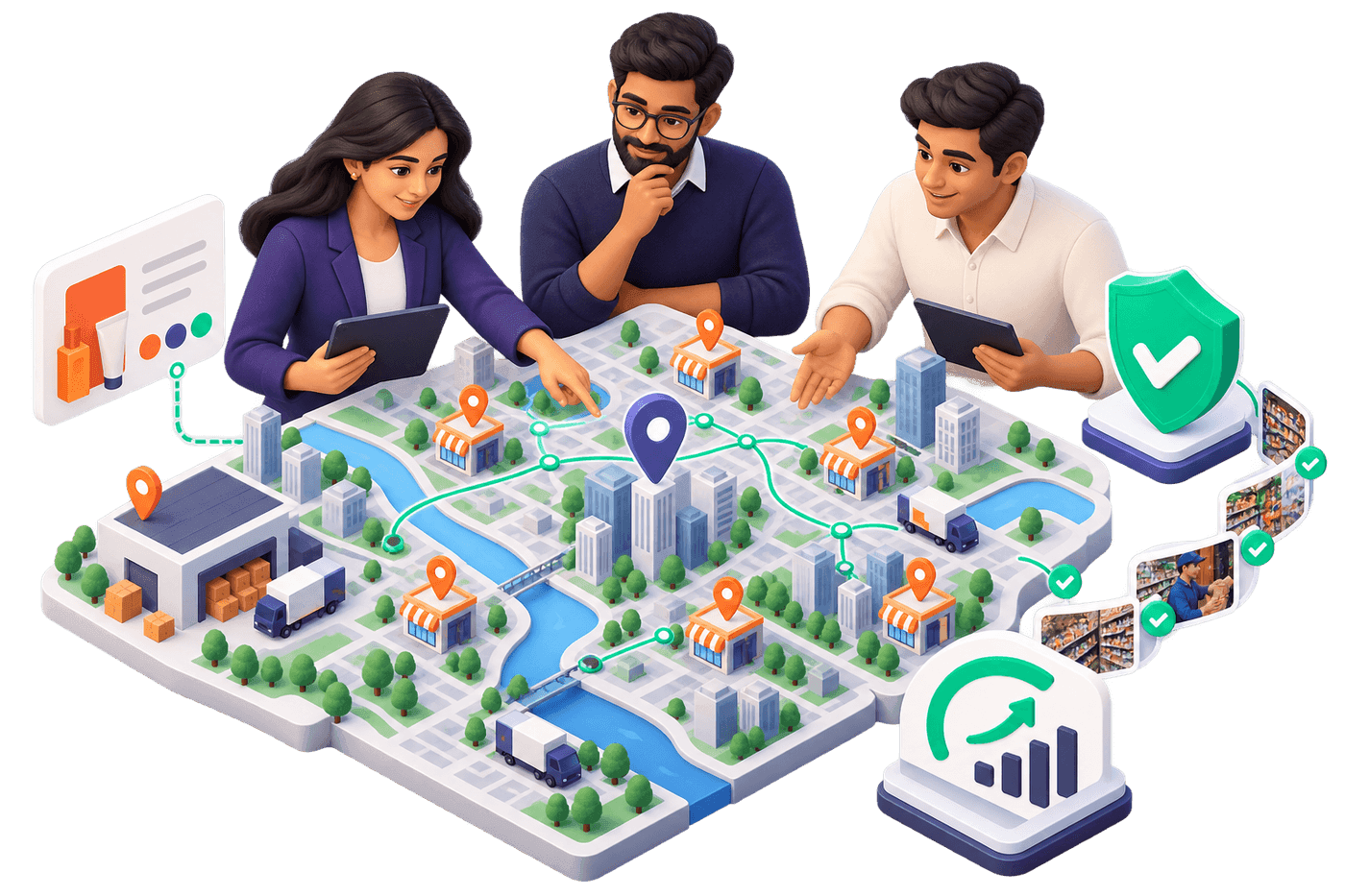
City density, completion quality and contribution become visible before geographic expansion.

No generic marketplace dashboard. Each role gets the actions, evidence and visibility needed to complete its part of the transaction.
Verified shelf access begins with a painful, measurable use case instead of a generic marketplace promise.
Each completed workflow can improve outlet matching, service reliability and repeat demand.
Campaign fees, retailer subscriptions and managed service layers can be tested city by city.
The investment case depends on completed transactions, contribution margin and repeat demand—not registered-account volume.
Example only—not a promise or quotation. Actual value depends on the approved pilot.Operational learning zone.
Comparable transactions.
Cohort-based validation.
Positive unit path.
Swipe or use the controls to explore the capabilities that remain attached to your role from first setup through close-out.
Instead of launching nationally, the team proves one repeatable category flow. It learns where work remains manual, how often participants return, what support costs and whether completed activity contributes positive margin.
The defensible layer is the reusable workflow, evidence, performance history and operating density—not a contact directory.
Qualified supply, request-to-completion conversion, time to evidence, repeat usage and contribution margin by cohort.
New cities follow readiness gates for supply, operations, support, governance and commercial viability.
We will assess role, geography, category and operating readiness before proposing a pilot.
Tell us your role, city, category, store target, budget range and preferred launch timing. The right operating team reviews the request before a sales call.