
Ask for evidence only when it has a purpose
Every requested image, quantity update or document should support an explicit decision. If nobody can explain what the evidence unlocks, it is probably unnecessary collection.
Use a four-part evidence model
A useful evidence requirement states the subject, timing, acceptance rule and owner. This turns a vague request for proof into something a retailer can complete and an operator can review consistently.
- Subject: the exact store, SKU, shelf or transaction.
- Timing: when the initial and follow-up proof is due.
- Acceptance: what must be visible or reconciled.
- Ownership: who submits, reviews, corrects and approves.
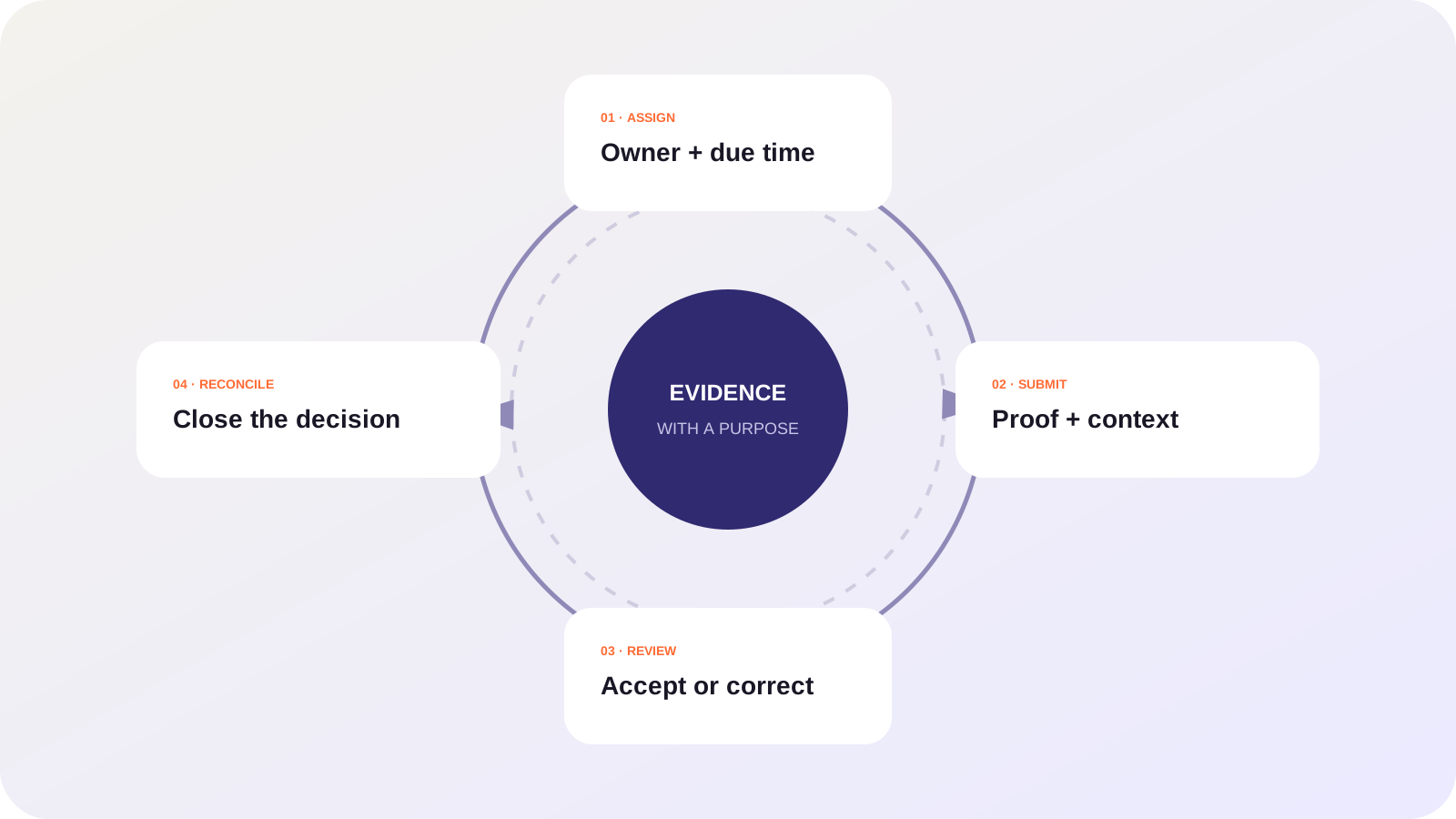
Make review proportional to risk
Low-risk completeness checks can be automated. Ambiguous media, identity mismatches, unusual stock variance and payment release should route to an authorised person with the full context.
Close the loop for the participant
A rejection without a reason creates support load. The participant should see the issue, required correction, due time and reviewer outcome. The final record should preserve both the original submission and the decision history.